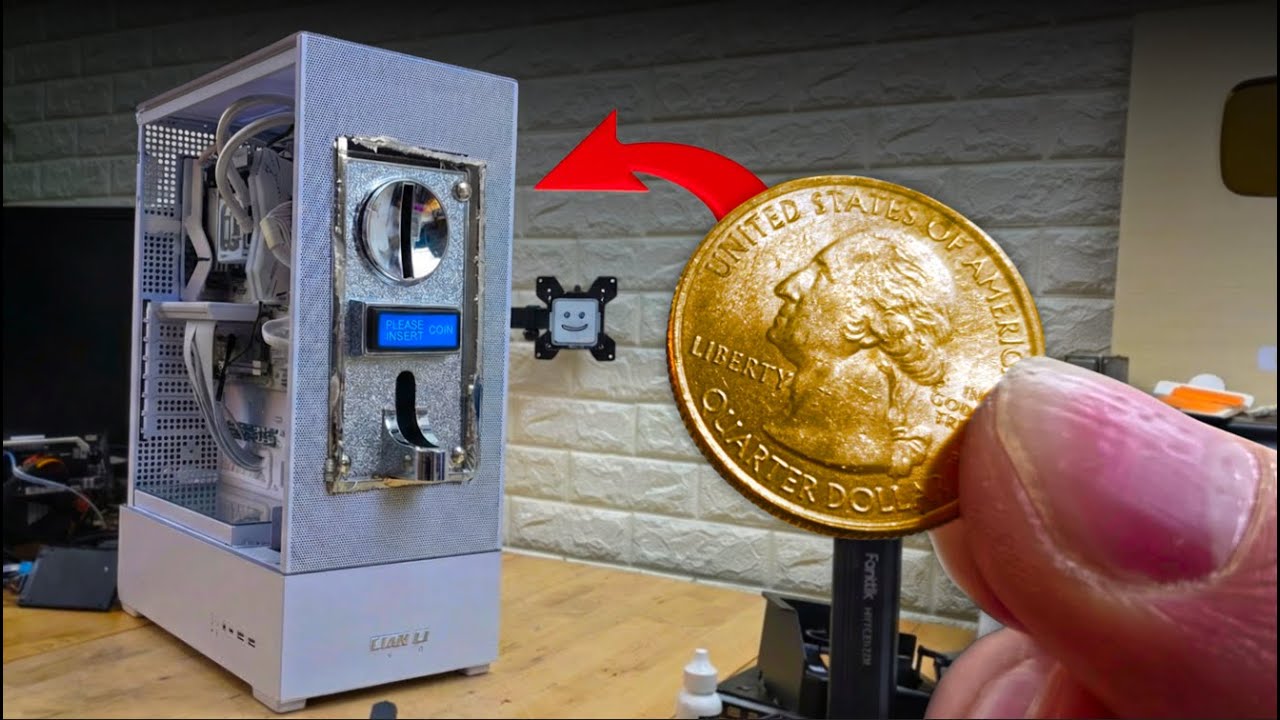
Microtransactions have been the bane of gamers ever since Oblivion’s horse armor DLC in 2006. But as we approach the 20th anniversary of the predatory practice, some users may want to kick it old school and get back to the original microtransaction: paying one shiny quarter for every play session at the arcade. Enter YouTube hardware engineer Mr. Yeester (stylized mryeester), who shared a new project this weekend that integrates a coin acceptor into a gaming PC, replacing a standard power switch with an arcade machine-style pay-to-play assembly.
The project, posted to mryeester’s YouTube channel, shows the process of assembling and programming the system so simply that many viewers with some technical proficiency can follow along and replicate the success at home.
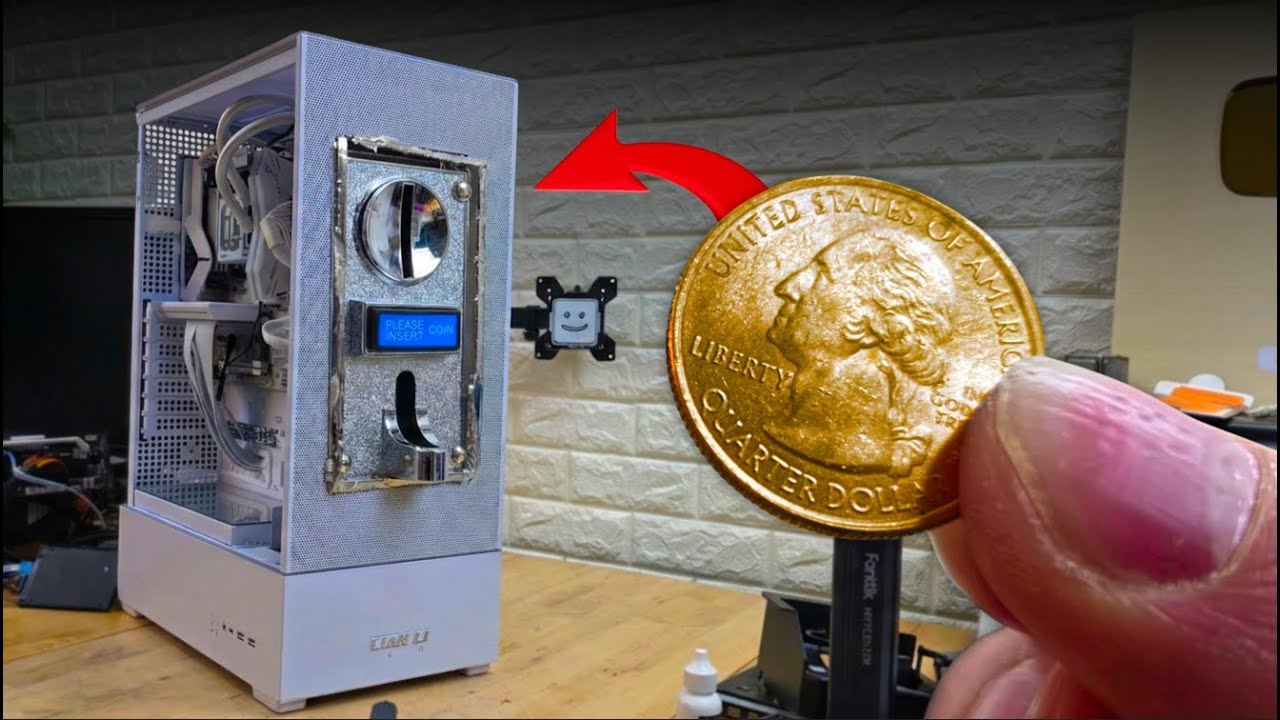
The chosen coin acceptor can be programmed by the owner to accept only a single specific denomination of currency, measuring the coin’s size and thickness with phototransistors and infrared LEDs as it passes through. The coin slot prevents spoofing by incorrect but similarly shaped objects through magnetic coils trained to the magnetic disturbance displaced by the chosen denomination.
Beyond the coin acceptor itself, the project continues in a largely standard manner. The output from the coin slot, which sends a signal when the correct coin is detected, is sent to a 12V relay module, which in turn activates a small physical lever assembly. The relay and coin acceptor are both powered via an ATX 24-pin power supply, plugged into a power supply breakout module. The transfer board separates all the rails of a standard desktop PSU, providing easy access to a simple 12V power supply.
After a digital setup process of the coin acceptor, done by running U.S. quarters through the reader over a dozen times to train the sensors on the coin, the most difficult part of assembly is stripping some 28-gauge wire, connecting the coin acceptor to a relay and both modules to 12V power, and finally creating custom motherboard power button header cables with a crimping kit.
Once both the coin acceptor and the relay are configured to send out a long, slow signal burst when a coin is read, the signal can be picked up as a power-on/off switch by a standard PC motherboard header, and you’re off to the races: you have a gaming PC ready to cost its users money for operation.
Mr. Yeester’s Amazon shopping list, containing all the necessary components and tools for assembling the project, totals around $135 before tax and shipping. Yeester also quickly put the coin acceptor in a carved-out cardboard box for his final deployment, a quaint solution that a more aesthetics-oriented maker might improve on for a bit more coin.
While this DIY project itself is simple and fun, what it indicates about the state of video gaming and computing is anything but. As nearly every YouTube comment indicates, users and enthusiasts are increasingly frustrated with the record-high prices of RAM. These record-high prices, almost 200% more than they were mere months ago, are entirely thanks to the data center market, which is already buying up 70% of 2026’s entire worldwide memory chip production. And of course, the games played on the expensive hardware aren’t getting any cheaper either, as gamers are forced to battle even more ads for the privilege of playing, while the games industry at large continues to stumble.

Follow Tom’s Hardware on Google News, or add us as a preferred source, to get our latest news, analysis, & reviews in your feeds.