This Humanoid Is Ready to Bring You a Toothbrush
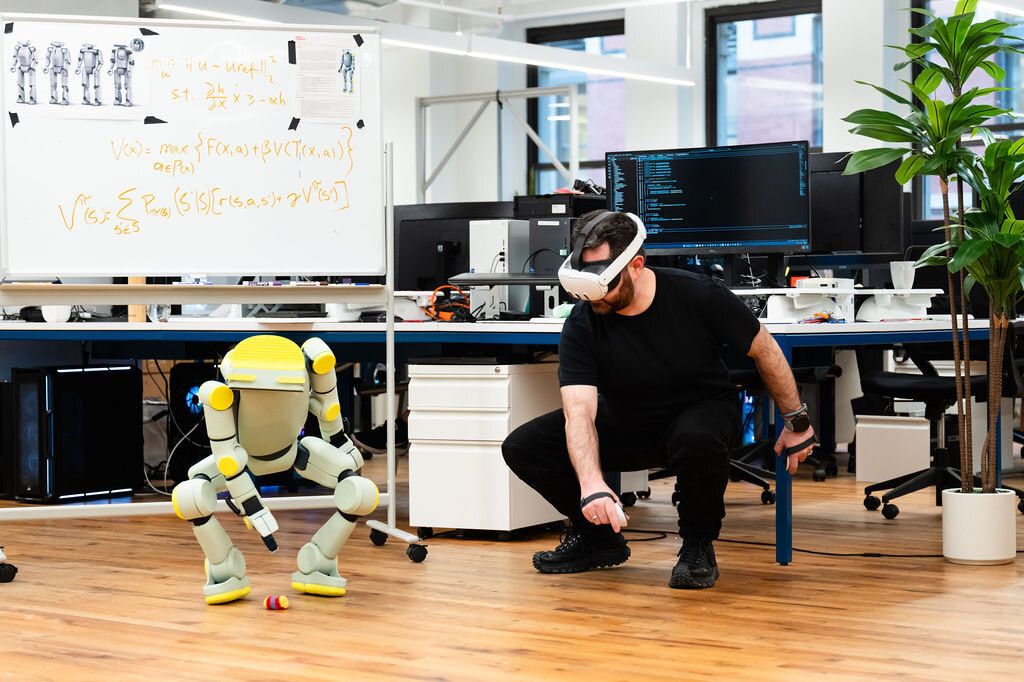
The newest humanoid robot on the scene, Sprout, is not designed to carry boxes or stack shelves. Instead, this charming and relatively cheap model, roughly the size of a 9-year-old child, is meant to help customers in hotels, shops, and restaurants.
“We said, ‘What if we could build something lightweight, engaging, and safe to be around, and capable enough to do some exciting things?’” says Robert Cochran, cofounder and CEO of Fauna, the startup behind Sprout.
Sprout is available to purchase starting today from $50,000. Cochran adds that his firm is already talking to hotels about using Sprout as a butler that brings toothbrushes and other items to guests in need.
Sprout’s launch is part of a growing industry in the United States. The business of humanoids is booming despite the fact that it’s still unclear how practical and useful these systems will be. More than a dozen US companies are working on humanoids, including Boston Dynamics, which recently signed a deal to use Google’s AI in its robots; Tesla, which is developing a system called Optimus; and startups like Agility Robotics, Figure AI, and 1X.
Unitree, a Chinese robot maker, has also found success selling inexpensive humanoids for entertainment and research purposes. Some of Unitree’s humanoids cost less than $20,000. When fully equipped with sensors and computers, however, they cost roughly the same as Sprout.
Fauna’s first customers include Disney, which already uses robots at some of its theme parks, and Boston Dynamics, which makes a range of legged robots for industrial use, including larger, stronger humanoids.

Courtesy of Fauna

Courtesy of Fauna
Cochran says that Sprout is designed to be easy to program, making it particularly useful in research settings. The robot comes with software libraries that let it scan its environment, walk autonomously, access language models, and more. The robot can also be teleoperated out of the box, which can be helpful for robot training purposes. Scientists at New York University are using Sprout to research new techniques for robotic manipulation and human-to-robot interaction. The company also says it has developed proprietary technology to help Sprout regain its balance if it stumbles.
While most humanoid robots are touted as factory workers, with some already being tested by automakers, Cochran says Fauna believes the first market for robots might be in the entertainment and service industries.
Cochran showed me a couple of interfaces for Sprout, including an app that shows the robot’s visual perspective and a coding interface that can be used to program the system in real time. Unlike most humanoids, Sprout is designed with human interaction in mind, which is why it comes with mechanical eyebrows to express interest, surprise, or confusion.
Source: www.wired.com…