AMD Ryzen 7 9850X3D CPU Review: Gaming’s Best Chip
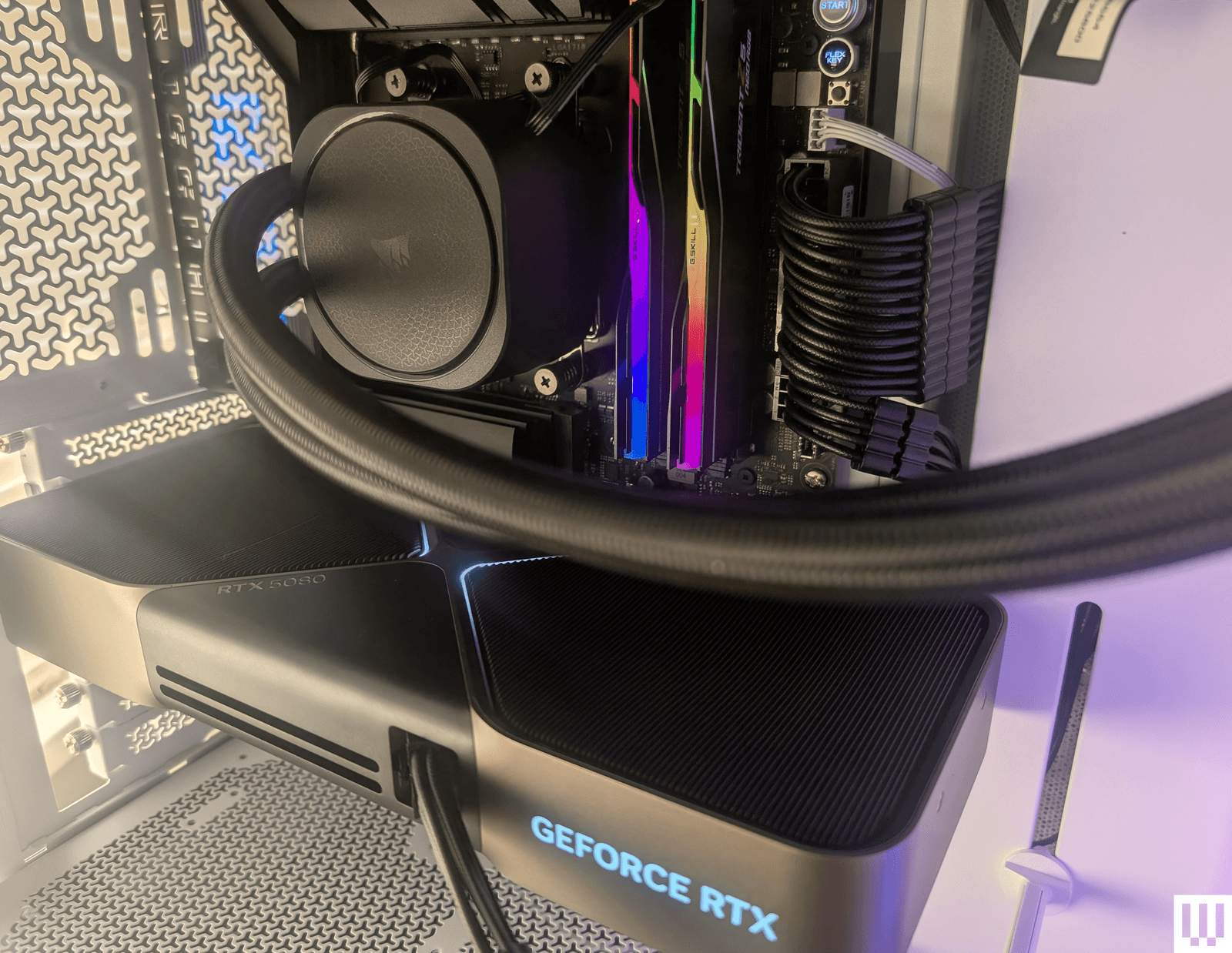
The BIOS and chipset drivers weren’t publicly available during review time, so AMD also sent along an Asus ROG Crosshair X870E Hero, a very well equipped motherboard with plenty of dedicated heat sinks and features for overclocking. Also included was a 32-GB dual channel kit of 6000 MHz G.Skill Trident Z5 Neo memory, as well as a Samsung 9100 Pro SSD. The gaming results are using the Nvidia RTX 5080 FE that I reviewed on its release last year. The motherboard might be a little fancier than most folks need, but otherwise I think it represents a pretty reasonable system I’d put together given the CPU.

Photograph: Brad Bourque
With a 360-mm AIO cooler, the Corsair Nautilus 360 RS, the chip was flipping between 79 and 80 degrees Celsius during the most demanding benchmarks, well below any fears of thermal throttling, although definitely on the high side. During mixed use, I was hovering between 59 and 65 °C, so my fans weren’t even working that hard. I imagine most AIO coolers shouldn’t have any issue keeping the heat in check. The good news is that we’re still on the same AM5 socket that AMD has pledged to continue supporting for at least another year, and there are plenty of examples of great motherboards and coolers to go with it.
One big draw for either chip is overclocking, and AMD has continued to make that process as painless and straightforward as possible. Even totally inexperienced overclockers should feel comfortable at least pressing the “Auto” button in Ryzen Master, which will show you the recommended changes, including to your memory speed, walk you through committing them in the OS and BIOS, then restart and run a stress test. There are several presets you can use, as well as a full manual mode, and multiple profiles with sharing support. Ryzen Master has come a long way over the years, and it feels more modern and approachable than Intel’s XTU.
Performance
While the 9850X3D is a gaming chip, it’s worth taking a quick look at some synthetic benchmarks first to see how it stacks up against the 9800X3D. In a Cinebench R23 single-core test, that extra boost clock stands, with the newer chip scoring 2,240 compared to the older chip’s 2,138, just shy of a 5 percent higher result. The multi-core test was even less dramatic, with the 9800X3D at 22,972 and the 9850X3D at 22,982, which is to be expected considering how similar the chips are.

via Brad Bourque
Source: www.wired.com…