
Museums incorporate "scent of the afterlife" into Egyptian exhibits

Most of what we know about ancient Egyptian mummification techniques comes from a few ancient texts. In addition to a text called The Ritual of Embalming, Herodotus, in his Histories, mentions the use of natron to dehydrate the body. But there are very few details about the specific spices, oils, resins, and other ingredients used. Science can help fill in the gaps, particularly given the expanding array of methods for conducting biomolecular analysis, including various forms of gas chromatography.
For example, a 2018 study analyzed organic residues from the mummy’s wrappings with a technique called gas chromatography-mass spectrometry. They found that the wrappings were saturated with a mixture of plant oil, an aromatic plant extract, a gum or sugar, and heated conifer resin. A new paper published in the Journal of Archaeological Science analyzed the chemical compositions of the odor-carrying volatile organic compounds (VOCs) associated with a broad sampling of balms and mummy tissues. The idea was to determine which odors were associated with organic embalming agents and which might have arisen from the process of decay.
Capturing the scent of the afterlife
Huber has previously worked on reconstructing residues on ancient incense burners excavated from Tayma, a walled oasis settlement in what is now Saudi Arabia that was part of a trade network—known as the Incense Route because it primarily transported frankincense and myrrh. Huber then turned her attention to Egyptian mummification. While most prior similar studies focused on samples gleaned from the bandages and tissues of actual mummies, she focused on the balms used to embalm accompanying organs stored in canopic jars.
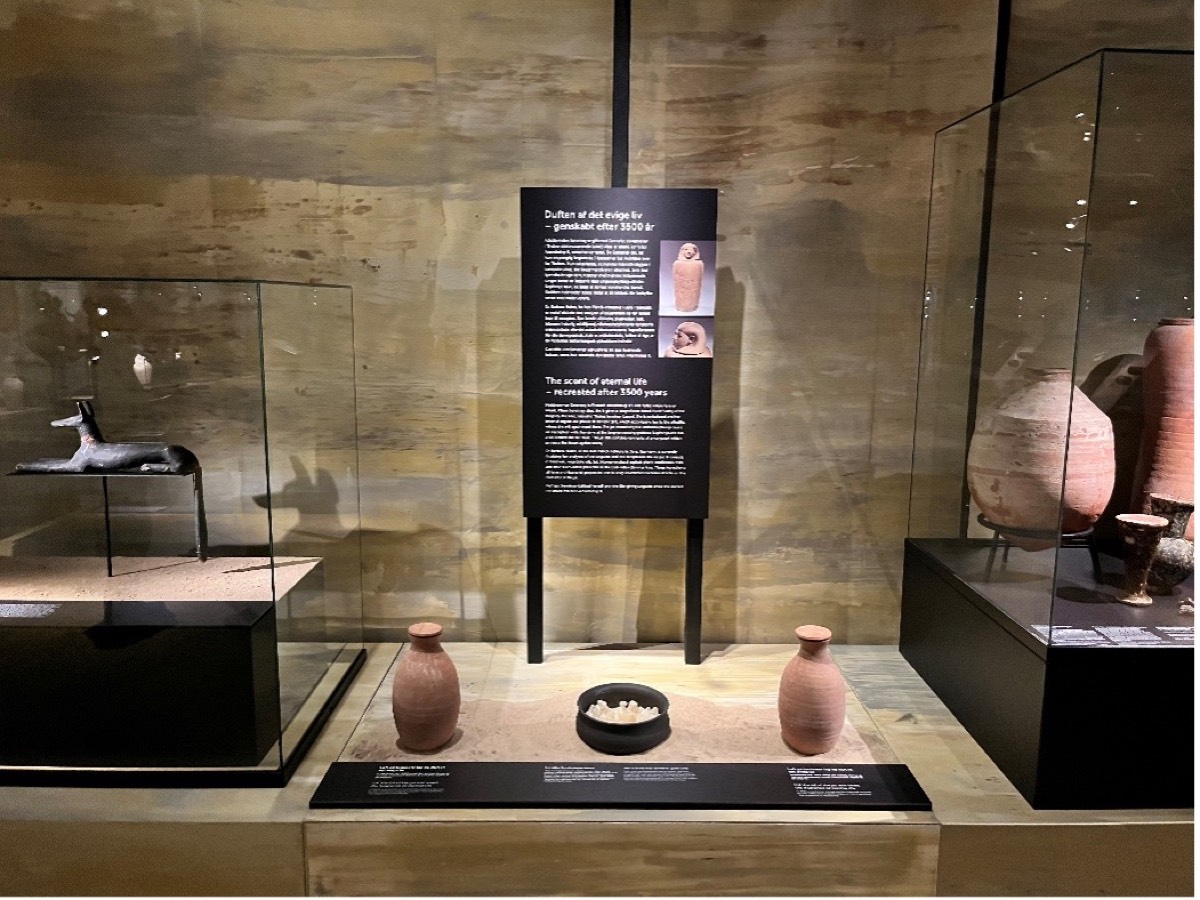

the reproduced scent is inserted into the paper via scent printing.
the reproduced scent is inserted into the paper via scent printing.
Michelle O’Reilly/CC BY
the reproduced scent is inserted into the paper via scent printing.
Michelle O’Reilly/CC BY
Her team’s analysis of the residue samples contained beeswax, plant oils, animal fats, bitumen, and resins from coniferous trees such as pines and larches, as well as vanilla-scented coumarin (found in cinnamon and pea plants) and benzoic acid (common in fragrant resins and gums derived from trees and shrubs). The resulting fragrance combined a “strong pine-like woody scent of the conifers,” per Huber, mixed in with “a sweeter undertone of the beeswax” and “the strong smoky scent of the bitumen.”
Source: arstechnica.com…