
UK Typhoon jets fitted with bargain-bin drone busters for Middle East sorties
Offbeat
Low-cost laser-guided rockets offer cheaper way to swat Shahed-style threats than firing pricey air-to-air missiles
Britain has deployed low-cost anti-drone rockets to the
Middle East, just weeks after successful tests of the equipment were announced.
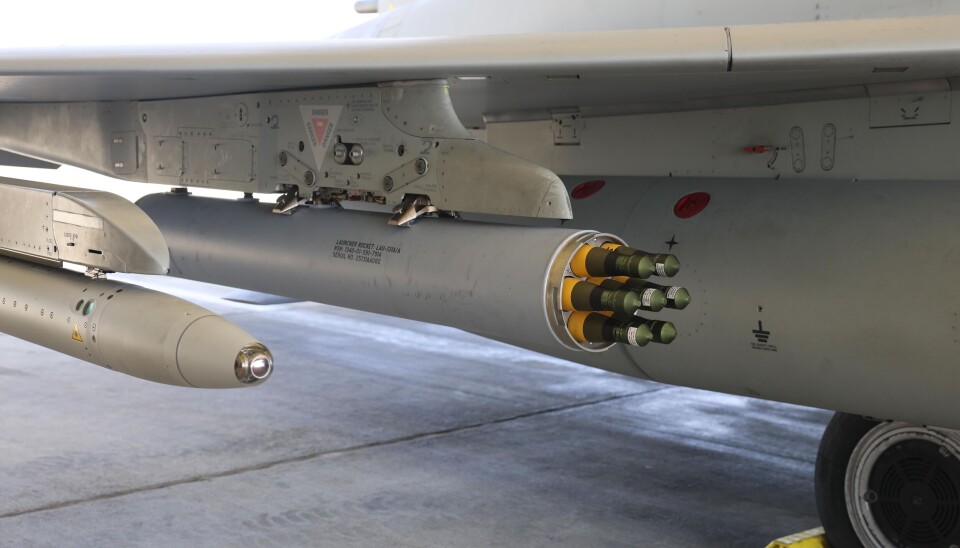
The Ministry of Defence (MoD) says the Advanced
Precision Kill Weapon System (APKWS) will be fitted to British Typhoon jets,
and has already seen operational use in the Middle East with No. 9 Squadron RAF.
As reported
by The Register last month, APKWS is actually a kit that adds laser homing capability to US-made Hydra 70 2.75-inch (70 mm) unguided rockets.
The kit splices a mid-section between the motor of the rocket
and its warhead that is equipped with deployable steering canards which flip out after launch. Laser seekers
mounted on the leading edge of those fins lock onto a laser-designated target and steer the rocket toward it.
Already in use on some US combat aircraft, the system is
said to cost $30,000 to $40,000. This makes it much less expensive than a
typical air-to-air missile, and possibly comparable to the cost of an Iranian
Shahed drone, one of the targets it is likely to be used against.
The threat posed by drones to bases such as RAF Akrotiri in Cyprus – due to the US-Iran conflict – has brought new urgency to the APKWS program, despite the weapon’s 24-year development history.

March saw a test strike on a ground-based target,
the MoD says, while the RAF’s Test and Evaluation Squadron conducted the successful
air-to-air firing in April.
“This has been a superb effort working with industry to test
and deploy this system in a matter of months, which will help the RAF shoot
down many more drones at a much lower cost,” said Luke Pollard, Minister for
Defence Readiness and Industry.
So it seems the powers-that-be can pull their finger out, if
the need is perceived as urgent enough. Contrast that with the program to
deliver the Royal Navy’s Type
26 frigates. Planning for what became the Type 26 began in 1998, and it is likely that 30 years will have elapsed before the first one enters service.
APKWS isn’t the only counter-drone technology entering UK service. The first tranche of Skyhammer interceptors and
launchers is due for delivery this month, following a multimillion-pound contract signed with manufacturer Cambridge Aerospace in April.
Late last year, the Royal Navy’s Wildcat helicopters were cleared
to carry the Lightweight
Multirole Missile, or Martlet, which is also laser-guided. Some were
deployed to RAF Akrotiri to help counter Iranian drones, while the
RAF also has the Rapid Sentry short-range air defense system that
fires Martlet missiles.
®
Source: www.theregister.com…