
Whats that on Mars? Passing NASA spacecraft snaps unsolved mystery.
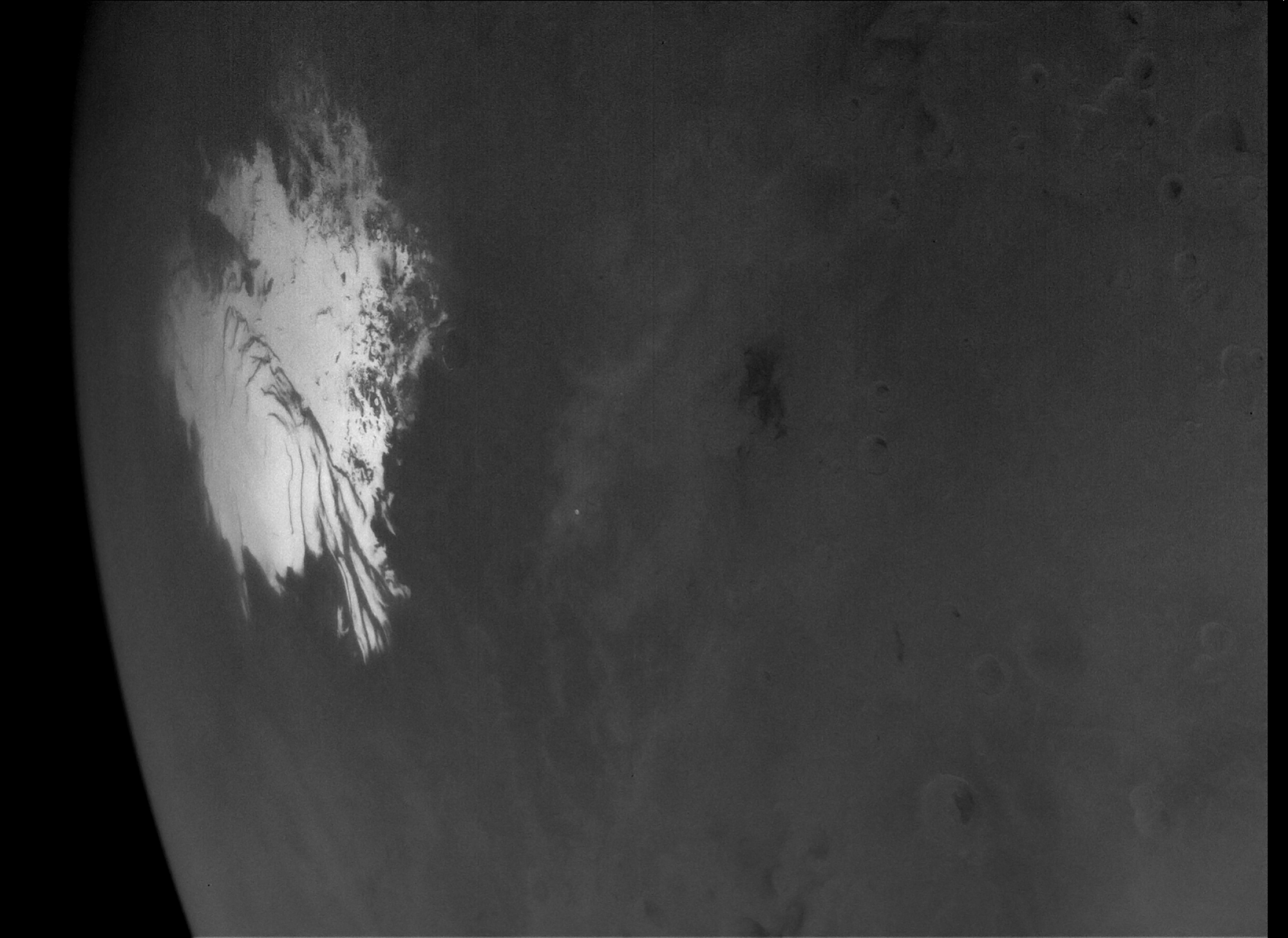
NASA‘s Psyche spacecraft just snapped some unusual new views of Mars that may require cocking your head sideways.
These space images can play tricks on your brain. At first glance, the bright white feature looks less like a polar ice cap and more like the eye of a storm or a cloud bank hanging off the edge of Mars. But that glowing patch is actually the planet’s frozen south pole. Because Psyche approached the Red Planet from a steep angle during its May 15 flyby, the familiar orientation has shifted dramatically here, pushing the south pole to the side of the frame instead of the bottom.
The photos, captured as the spacecraft used Mars for a gravity assist on its way toward the asteroid belt, offer the sharpest look at the water ice-rich south polar cap. The frozen region stretches more than 430 miles across, and Psyche photographed it at a resolution of just over a half-mile per pixel.
The flyby itself was more than just a photo op. Psyche passed within 2,864 miles of the Martian surface, using the planet to boost its speed by roughly 1,000 mph and redirect its path toward the asteroid Psyche, a metal-rich object orbiting between Mars and Jupiter.
Scientists are especially interested in Mars’ south polar cap because researchers still debate what may lie beneath it. Radar observations have hinted at possible underground liquid water under the ice, while newer studies suggest the signals could instead come from buried rock or dust layers.
Mashable Light Speed
“This new data won’t settle the debate,” said Gareth Morgan, first author on research that was published six months ago about the ice cap, but “it makes it very hard to support the idea of a liquid water lake.”
The mystery has kept the region under close scrutiny for years. In 2018, scientists working with the European Space Agency’s Mars Express orbiter announced evidence that suggested it may have a buried lake under nearly a mile of ice. Because liquid water is considered one of the key ingredients for life, the juicy finding immediately drew global attention.
But newer observations from NASA’s Mars Reconnaissance Orbiter complicated the picture. Using a more powerful radar technique, researchers revisited the same region and found weaker signals than expected for liquid water. Some scientists now suspect the readings point to smooth rock layers or ancient lava flows trapped beneath the ice.
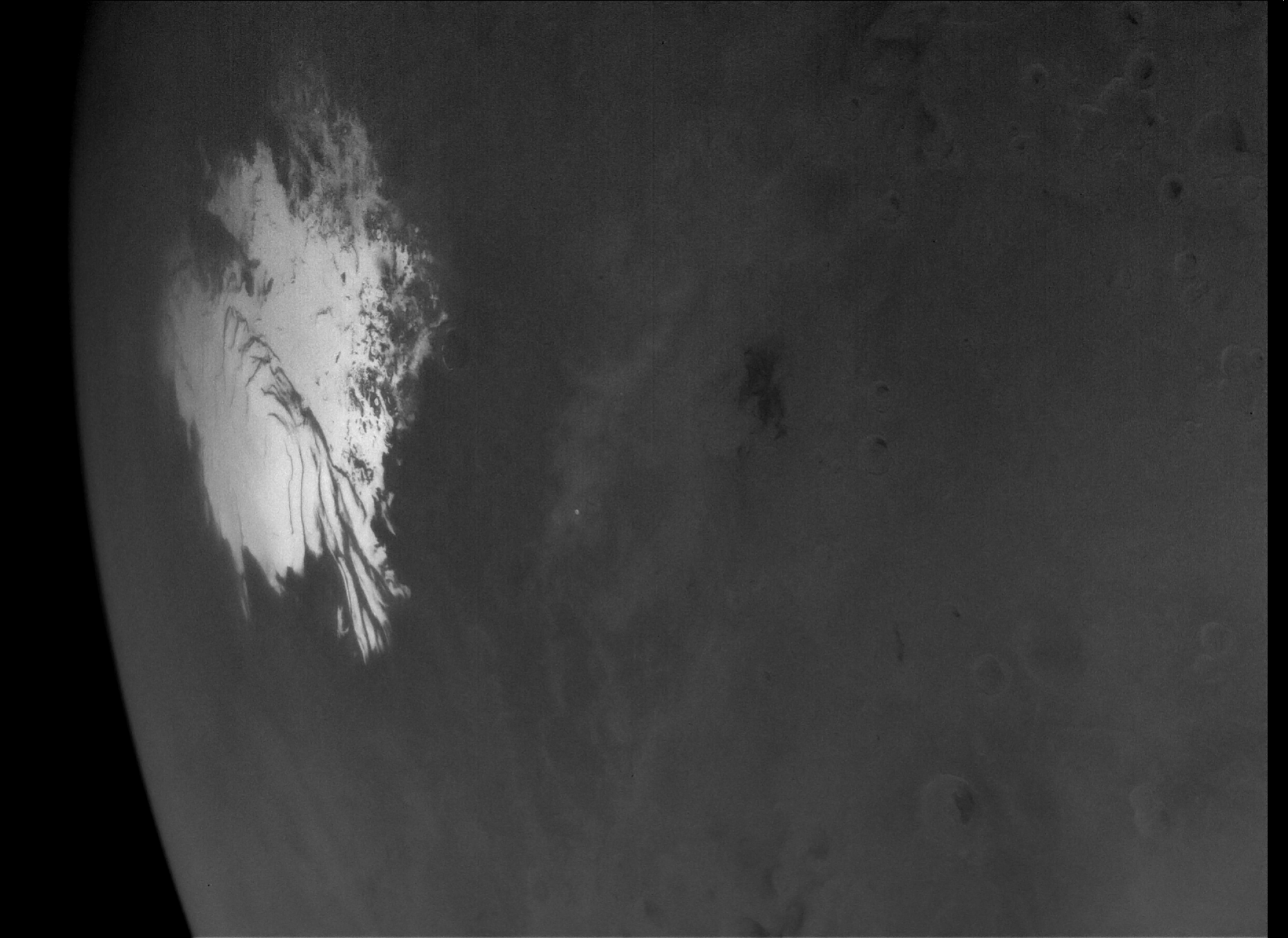
NASA’s Psyche captured the sharpest-yet view of the ice cap at Mars’s south pole after it made its close approach on May 15, 2026.
Credit: NASA / JPL-Caltech / ASU
The polar caps are scientifically important because they record Mars’ climate history. The caps consist of stacked layers of water ice, frozen carbon dioxide, and dust deposited over vast spans of time. Scientists compare them to pages in a history book because the layers may preserve evidence of how Mars’ conditions changed over billions of years.
Though Psyche’s flyby captured thousands of images of Mars and its atmosphere, scientists used the encounter primarily as a rehearsal for the mission’s future arrival at asteroid Psyche. During the close approach, engineers calibrated cameras and other instruments.
Scientists suspect asteroid Psyche could be the exposed metallic core of an early failed planet, offering a rare glimpse into the deep interior of worlds like Earth. But given that the robotic spacecraft won’t arrive for another three years, the team has plenty of time to keep an eye on the planet in its rear view, said Jim Bell, the Psyche imager instrument lead at Arizona State University in Tempe, Arizona.
“As the spacecraft continues its journey after the flyby,” Bell said in a statement, “we’ll continue calibration imaging of Mars for the rest of the month as it recedes into the distance.”
Source: mashable.com…