
That an app 'Fits on a Floppy' is still a useful measure in 2026
Software
In a world of mass-produced bot-slopware, small is more beautiful than ever
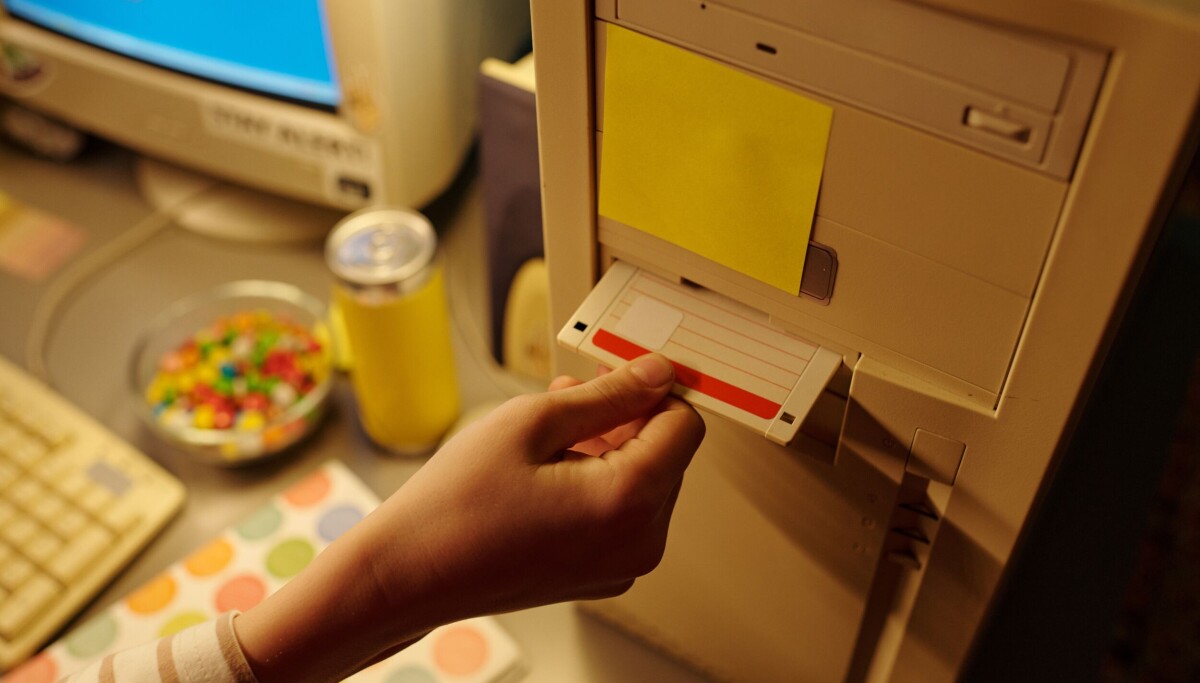
If you’re old enough, you might remember using floppy disks, either of the 3.5-inch or 5.25-inch variety. They didn’t hold much and often you had to have many disks to install one program. Don’t be misled by Fits on a Floppy’s retro-tech name: it is most
definitely not about 20th century data media. It’s about compactness and
comprehensibility.
Fits on a Floppy describes
itself as “a Manifesto for Small Software,” and as we read it, we found
ourselves nodding in agreement, right from the opening line:
Software has lost its way.
That is certainly the impression of this author, and it is not just
us. We are irresistibly reminded of the Red Hat developer’s six waves of
industry BS that we recounted
in February.
Like any eternal verity of the computing industry, there’s even an XKCD comic about it, if you needed
any more persuading. XKCD’s own internal citations, both about voting machines and indeed about the use of the blockchain,
reinforce the message. Randall Monroe spells it out:
Our entire field is bad at what we do, and if you rely on us, everyone will die.
That sounds about right. And parenthetically, anyone who says that
they can improve anything with either blockchain or AI
is no more to be trusted than a schoolteacher who gives no homework.
A year before that Red Hat engineer talked to us about waves of
industry BS, Belgian consultant Bert
Hubert talked to The Reg about digital sovereignty – and he
feels similarly. In 2024, he wrote A
2024 Plea for Lean Software in tribute to the great Niklaus Wirth,
who passed away earlier that month.
In our own obituary
for Professor Wirth, we mentioned the 1995 paper that inspired
Hubert: A Plea for Lean
Software (this is a PDF of a scan – but we have posted a more
readable plain
text version here).
One of the lasting effects of that paper is what is now called Wirth’s Law:
Software gets slower faster than hardware gets faster.
Sadly, that seems to have been its main impact. As a usable
demonstration of his 2024 “plea,” Hubert offered a working example, which
he explained in Trifecta
Technology. It’s a web image-sharing tool, implemented in under
2000 lines of code. There’s also a page for the Trifecta app
itself, which comes in as a 1.7 MB compressed Docker file. (With
some clever
disk formatting, you could get that
on a 1.4 MB floppy.)
There are, as that anonymous Red Hatter observed, so many different
layers of unnecessary complication and plain old marketing lies in
modern IT that it is now hard to even keep track of them. One point of
the Fits on a Floppy idea is that if you impose an artificial
limit on project size, merely by keeping it very small, you will be
forced to keep it very simple. That simplicity is the goal here, not
fitting on 1980s physical media.
You might react with scorn when you hear the idea that in the 2020s,
anything useful could fit into under 1.5 MB. When even a leading tool to
write an ISO file onto a USB key is a hundred times that size, it sounds absurd. But it really is not.
The mind behind the manifesto is developer Matt Sephton, and he
offers 18 tiny but useful apps that he’s written to prove his point –
plus a screensaver which we feel sure is an hommage to
Berkeley’s classic
Flying Toasters screensaver.
Others are still making useful single-floppy-sized apps today. We
wrote about the revival
of the Dillo web browser, and at last year’s FOSDEM, the project
lead was handing out
floppies with the latest release. The whole app, on one diskette. Drew
DeVault’s Hare programming language is still in
development, but when it reaches version 1.0, he plans to sell copies on a floppy:
Hare fits on a 3.5-inch floppy disc — these will be available for purchase when Hare 1.0 is released!
Another tiny modern language is the Janet Language. It’s not
quite so small, but its just over 2MB
download could fit onto the 2.8 MB floppies that were used
in later IBM PS/2 models and the NeXTstation.
The real point here is about the readability and long term
maintainability of compact, even minimalistic code. It’s a similar point
to that made in Dave Gauer’s Ascetic Computing
essay, which we cited and linked to when looking
at OpenBSD 7.9.
Small size and simplicity is what Fits on a Floppy is really
talking about, not about physical media. He explicitly spells it out for
the hard-of-thinking:
I don’t miss floppy disks. I miss the mindset they demanded – that every byte matters, that constraints breed creativity, and that software should be light on its footprint.
Bert Hubert too returned to this theme when he wrote a piece On
Long Term Software Development.
At this
year’s Open Source Policy Summit, we saw some pundits pontificating
that to escape the US cloud, the answer was that Europe needed its
own companies running their own datacenters running
Europe’s own domestic cloud.
This is so manifestly Getting The Wrong End Of The Stick that it put
us in mind of Wolfgang Pauli’s famous line: “That is not only not right;
it is not even wrong.”
The way to escape a broken model that was a bad
idea in the first place is not to make your own sovereign version. All
you’re doing is locking yourself in your own personal cage. The smart
answer is to discard the broken model, and go back to an older, simpler
model where organizations own and store their own data on their own
servers.
As ever, the KISS
Principle is one of the best guidelines. It’s Occam’s Razor in
reverse: the best solution is the simplest possible solution. If the
problem is that you are trapped in someone else’s cloud, then don’t
switch to another cloud and risk it happening again: get your private
data out of the cloud altogether. Just Use One Big
Server. Hire some grumpy old techies with grey hair (or none) to run
it – there are plenty out there, but ageism keeps them out of work.
At the smallest and most local end of this scale, then one useful
guiding principle is to just keep the tools as small as you can possibly
make them. It’s an artificial limit, but that does not lessen its
validity. It’s not the only way. It may not even be the best way. But
it’s a way, a simple, clear, obvious way – and there’s nothing to
prevent anyone finding their own different path to radical
simplicity.
The PC rose to greatness running on two 360 kB floppy drives – hard
disk drives only came along later. Tools like Lotus 1-2-3 redefined
business management running on one 360 kB disk, with a second 360 kB
data disk in drive B: – and this vulture is willing to bet that some
spreadsheets built on such machines, long since converted to Microsoft
Excel, are still running multinationals, and indeed nations, today.
Compared to that, 1.4 MB is luxurious. ®
Source: www.theregister.com…