
5 Reasons Why the Samsung Galaxy Fold is a Game-Changer
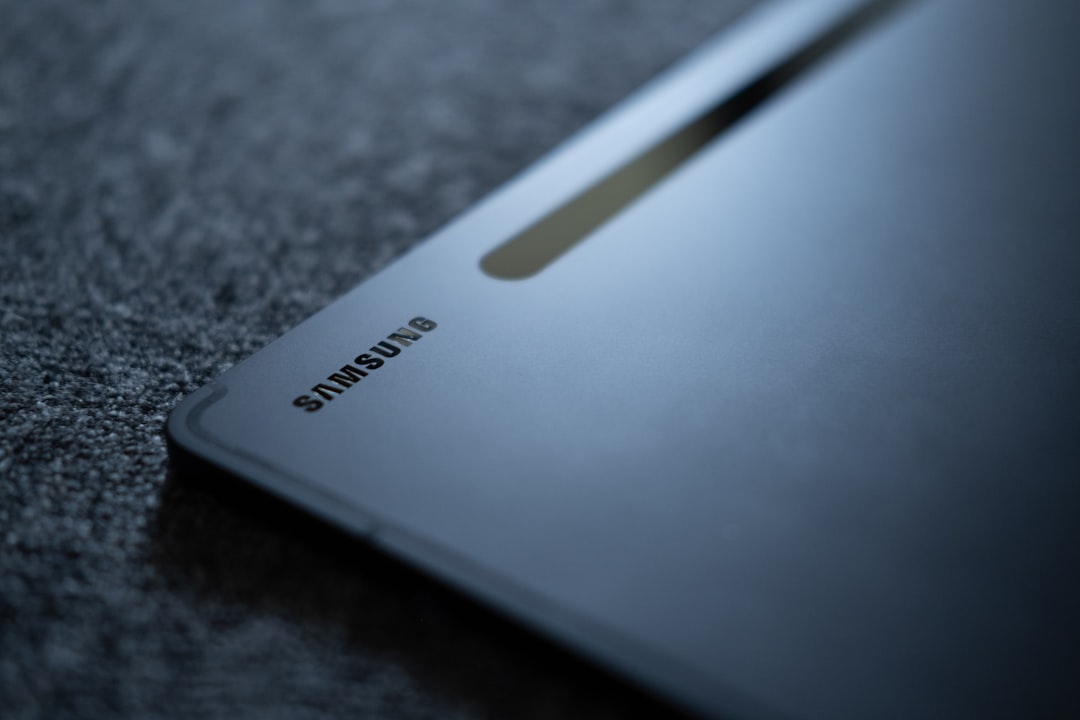
- Redefining the Smartphone Form Factor
The Samsung Galaxy Fold, upon its initial unveiling, immediately sparked conversations about the future of mobile technology. Its most striking feature, the foldable display, transcended the conventional slab design that had dominated the smartphone market for over a decade. This wasn’t merely an incremental upgrade; it was a fundamental re-imagining of what a smartphone could be, pushing the boundaries of engineering and user experience.
A Dual-Purpose Device: Phone and Tablet in One
At its core, the Galaxy Fold offers a chameleon-like adaptability that no rigid smartphone can match. When folded, it presents a compact, easily pocketable device, perfect for quick glances at notifications, making calls, or navigating on the go. The narrow but functional cover screen ensures that essential tasks remain accessible without the need to fully unfold the device. This “phone mode” maintains a level of discretion and convenience that users have come to expect from their everyday handsets.
However, the true magic unfolds—quite literally—when the device is opened. The internal 7.6-inch Dynamic AMOLED display transforms the device into a mini-tablet, providing an expansive canvas for a multitude of activities. This seamless transition from a compact phone to a large-screen tablet within a single device is where the Fold truly earns its “game-changer” moniker. It eliminates the need for users to carry two separate devices, consolidating their digital life into one innovative package.
The Engineering Marvel of the Hinge
Central to the Galaxy Fold’s transformative design is its meticulously engineered hinge mechanism. This sophisticated component is the silent hero, enabling the device to endure countless folds and unfolds while maintaining structural integrity. Early iterations of foldable technology faced scrutiny regarding hinge durability, and Samsung invested heavily in refining this crucial element.
The hinge’s precision allows for a smooth, fluid motion when opening and closing the device, providing a satisfying tactile experience. It’s not just about functionality; it’s about the feeling of a premium, well-crafted piece of technology. The engineering behind the hinge directly impacts the user’s confidence in the device’s longevity and reliability, a critical factor for a product introducing a radical new form factor. Its design also contributes to the device’s ability to lie flat when unfolded, a subtle yet significant detail that enhances the tablet experience. Without a robust and reliable hinge, the entire concept of a foldable smartphone would crumble, making its development a cornerstone of the Fold’s groundbreaking nature.
- Unlocking Unprecedented Multitasking Capabilities
While larger displays have always offered more screen real estate, the Galaxy Fold leverages its expansive unfolded display in a way that goes beyond mere size; it fundamentally alters the landscape of mobile multitasking. Traditional smartphones, even those with large screens, often feel constrained when attempting to run multiple applications simultaneously, leading to a fragmented and inefficient user experience. The Fold, however, is engineered from the ground up to excel in this domain.
Multi-Active Window: A New Paradigm for Productivity
The cornerstone of the Fold’s multitasking prowess is its “Multi-Active Window” feature. This allows users to run up to three applications simultaneously on the main internal display, arranged intuitively across the screen. Imagine having a video playing in one section, a web browser open for research in another, and a note-taking app active in a third – all without significant performance degradation. This is not simply picture-in-picture; it’s a genuine split-screen experience that mirrors the productivity potential of a desktop or laptop.
For professionals, this means being able to reference documents while composing emails, cross-referencing data across spreadsheets, or monitoring multiple communication channels at once. For casual users, it opens up possibilities for watching sports while live-chatting with friends, following recipes while video calling, or even playing games while looking up guides. The ability to resize these windows and switch between active applications with ease makes the Fold a true portable workstation. This level of simultaneous interaction is a significant leap forward from the single-app focus that characterizes most smartphones, empowering users to be significantly more efficient on the go.
Drag and Drop Across Applications
Further enhancing the Fold’s multitasking capabilities is its support for seamless drag-and-drop functionality between compatible applications. This seemingly small feature has a profound impact on user workflow and productivity. Instead of copying and pasting text or images between apps – a cumbersome process on smaller screens – users can simply drag content directly from one active window to another.
Consider, for example, compiling information for a presentation. A user could have a web browser open on one side of the screen, a gallery app on another, and a note-taking or word processing app on the third. They could then drag an image directly from the gallery into their notes, or select text from a webpage and drop it into an email draft. This intuitive interaction streamlines workflows, reduces friction, and significantly cuts down on the time and effort required to perform common tasks that involve multiple applications. It transforms the mobile device from a consumption-first gadget into a powerful creation and productivity tool, blurring the lines between mobile and desktop computing.
- A Canvas for Immersive Entertainment and Creativity
Beyond productivity, the expansive display of the Galaxy Fold opens up new frontiers for entertainment and creative pursuits, offering an experience that simply cannot be replicated on traditional smartphone screens. The shift from a smaller, often rectangular display to a near-square tablet-sized screen dramatically changes how users interact with media and applications.
Elevated Gaming and Media Consumption
For gamers, the Galaxy Fold transforms into a portable console. The larger screen provides an unparalleled immersive experience, making details sharper, environments more expansive, and controls more comfortable, especially for games that benefit from a wider field of view. The vibrant Dynamic AMOLED display, with its rich colors and deep blacks, ensures that graphics pop and cinematic sequences are delivered with stunning clarity. This isn’t just about size; it’s about the quality of the visual experience.
Similarly, for media consumption, watching movies, TV shows, or streaming videos on the unfolded display is a revelation. The larger canvas minimizes the feeling of being confined to a small window, allowing viewers to truly get lost in the content. Subtitles are more legible, details are more apparent, and the overall viewing experience is significantly more engaging than on a typical smartphone. Coupled with quality stereo speakers, the Fold becomes a personal portable theater, perfect for long commutes or leisurely evenings. The aspect ratio, while not always perfectly matching standard video, still offers a far more encompassing view than traditional phones, making it a compelling device for entertainment enthusiasts.
Empowering Creative Expression
The Galaxy Fold isn’t just for passive consumption; it’s also a powerful tool for creative individuals. The large, high-resolution display provides ample space for sketching, photo and video editing, and digital art. For artists, the increased screen real estate, especially when combined with a stylus (like the S Pen on newer Fold models), offers a much more natural and precise drawing or painting experience than on a cramped phone screen. Details can be refined with greater accuracy, and the overall composition can be viewed without constant zooming and panning.
Photographers and videographers can appreciate the Fold’s ability to display their work with greater fidelity, allowing for more precise adjustments during editing. Cropping, color correction, and applying effects become less arduous when there’s more room to maneuver tools and preview changes. Music producers can utilize the larger screen for more complex DAW (Digital Audio Workstation) interfaces, making beat creation and track arrangement more intuitive. This blend of portability with a generous and high-quality display makes the Fold an attractive proposition for anyone looking to unleash their creativity on the go, making it a true game-changer for mobile content creation.
- Pioneering Durability and Material Innovation
The concept of a foldable phone was once relegated to science fiction, largely due to the immense engineering challenges associated with creating a display that could bend repeatedly without degradation. Samsung’s journey with the Galaxy Fold, particularly after its initial launch, has been a masterclass in material science and engineering, leading to significant advancements in display technology and device durability. This focus on pioneering robustness against mechanical stress is a critical factor in its “game-changer” status.
The Evolution of the Foldable Display
The heart of the Galaxy Fold’s innovation lies in its foldable display. Early iterations relied on polymer-based screens, which, while flexible, presented challenges regarding scratch resistance and long-term durability. Samsung’s subsequent advancements introduced Ultra Thin Glass (UTG) technology. This groundbreaking material is a hybrid of glass and plastic polymers, offering the inherent flexibility required for folding while providing a significantly enhanced level of durability and a more premium feel compared to previous plastic layers.
The UTG not only makes the screen more resilient to scratches and impacts but also contributes to a smoother tactile experience, similar to interacting with traditional glass displays. The continuous refinement of the display stack, including protective layers and adhesives, has been crucial in ensuring the screen can withstand hundreds of thousands of folds over its lifespan. This evolution in foldable display technology is not just about a single device; it’s about pushing the entire industry forward, proving that truly flexible, durable displays are not only possible but commercially viable.
Advanced Hinge Mechanisms and Internal Protections
Beyond the display itself, the entire structure of the Galaxy Fold has been engineered for resilience. The multi-gear hinge, initially a point of vulnerability, has undergone rigorous development. Modern Fold hinges are designed to be more robust, capable of withstanding tens of thousands of folds without significant wear or creasing. They incorporate brushes and other mechanisms to repel dust and debris, addressing an early concern that could compromise internal components. The precision engineering ensures that the hinge maintains its smooth action and the display remains protected when closed.
Furthermore, internal protections against dust and water ingress have been steadily introduced and improved. Features like “Sweeper technology” within the hinge actively brush away particles, and later models achieved IPX8 water resistance, a remarkable feat for a device with so many moving parts and open seams. This level of protection, previously unthinkable for a foldable, instills greater confidence in users and broadens the environments in which the device can be comfortably used. The cumulative effect of these material and mechanical innovations ensures that the Galaxy Fold isn’t just a fragile gimmick but a robust and reliable piece of technology, proving that cutting-edge design can also be durable.
- Shaping the Future of Mobile Computing and User Expectations
The Samsung Galaxy Fold is more than just a new product; it is a declaration of intent, a vision for the future of mobile technology that extends beyond incremental improvements. By demonstrating the feasibility and utility of foldable devices, Samsung has irrevocably altered user expectations and challenged conventional wisdom about what a smartphone can and should be.
Catalyzing Innovation Across the Industry
Before the Galaxy Fold, the smartphone market, while mature, was often criticized for its lack of truly revolutionary advancements. New models often offered better cameras, faster processors, or slightly larger screens, but the fundamental user experience remained largely unchanged. The Fold shattered this complacency. Its very existence spurred other manufacturers to invest heavily in their own foldable and rollable display technologies. Companies like Huawei, Xiaomi, Oppo, and Motorola have since launched their own foldable devices, each attempting to refine the form factor and user experience.
This competitive landscape is a direct result of Samsung’s pioneering efforts. It fosters innovation not just in hardware – like hinge design and display durability – but also in software, as operating systems and applications need to adapt to dynamic screen sizes and new multitasking paradigms. The Fold acted as a catalyst, pushing the entire mobile industry into a new era of experimental and truly innovative form factors, ensuring that the future of smartphones will be far more diverse and exciting than the past decade.
Redefining User Interaction and Application Design
The dynamic nature of the Galaxy Fold’s display forces a rethinking of how users interact with their devices and how applications are designed. App developers can no longer assume a fixed screen size or orientation. Instead, they must consider seamless transitions between the smaller cover screen and the larger main display, adapting layouts and functionalities on the fly. This “Continuity” feature, where an app seamlessly transitions from the cover screen to the main screen upon unfolding, is a crucial part of the Fold’s user experience.
Furthermore, the enhanced multitasking capabilities and the sheer screen real estate encourage more sophisticated and immersive application designs. Developers can create more feature-rich mobile versions of their software, previously limited by smaller screens. The advent of foldable phones also paves the way for new interaction models, potentially integrating stylus input more deeply into the mobile experience, or even gesture-based controls that take advantage of the device’s unique physical properties. By creating a device that challenges established norms, the Galaxy Fold is actively shaping the future of mobile application development and user interface design, ensuring that the next generation of mobile experiences will be more adaptive, versatile, and ultimately, more compelling.
FAQs
What is the Samsung Galaxy Fold?
The Samsung Galaxy Fold is a foldable smartphone that features a 7.3-inch Infinity Flex Display that allows the device to be folded in half, transforming it from a tablet into a compact smartphone.
What are the key features of the Samsung Galaxy Fold?
Key features of the Samsung Galaxy Fold include a 7.3-inch Infinity Flex Display, a 4.6-inch cover display, a versatile camera system, and app continuity that allows for seamless transition between the cover and main displays.
What are the specifications of the Samsung Galaxy Fold?
The Samsung Galaxy Fold is powered by a Qualcomm Snapdragon 855 processor, 12GB of RAM, and 512GB of internal storage. It also features a 4,380mAh battery and a total of six cameras – three on the back, two on the inside, and one on the cover.
How much does the Samsung Galaxy Fold cost?
The Samsung Galaxy Fold is priced at $1,980 in the United States, making it one of the most expensive smartphones on the market.
What are the potential drawbacks of the Samsung Galaxy Fold?
Some potential drawbacks of the Samsung Galaxy Fold include its high price, the durability of the foldable display, and the bulkiness of the device when folded. Additionally, the device may not be compatible with all existing smartphone accessories.