
Dyson's CameraJet is a $500 three-in-one toothbrush that scans your maw
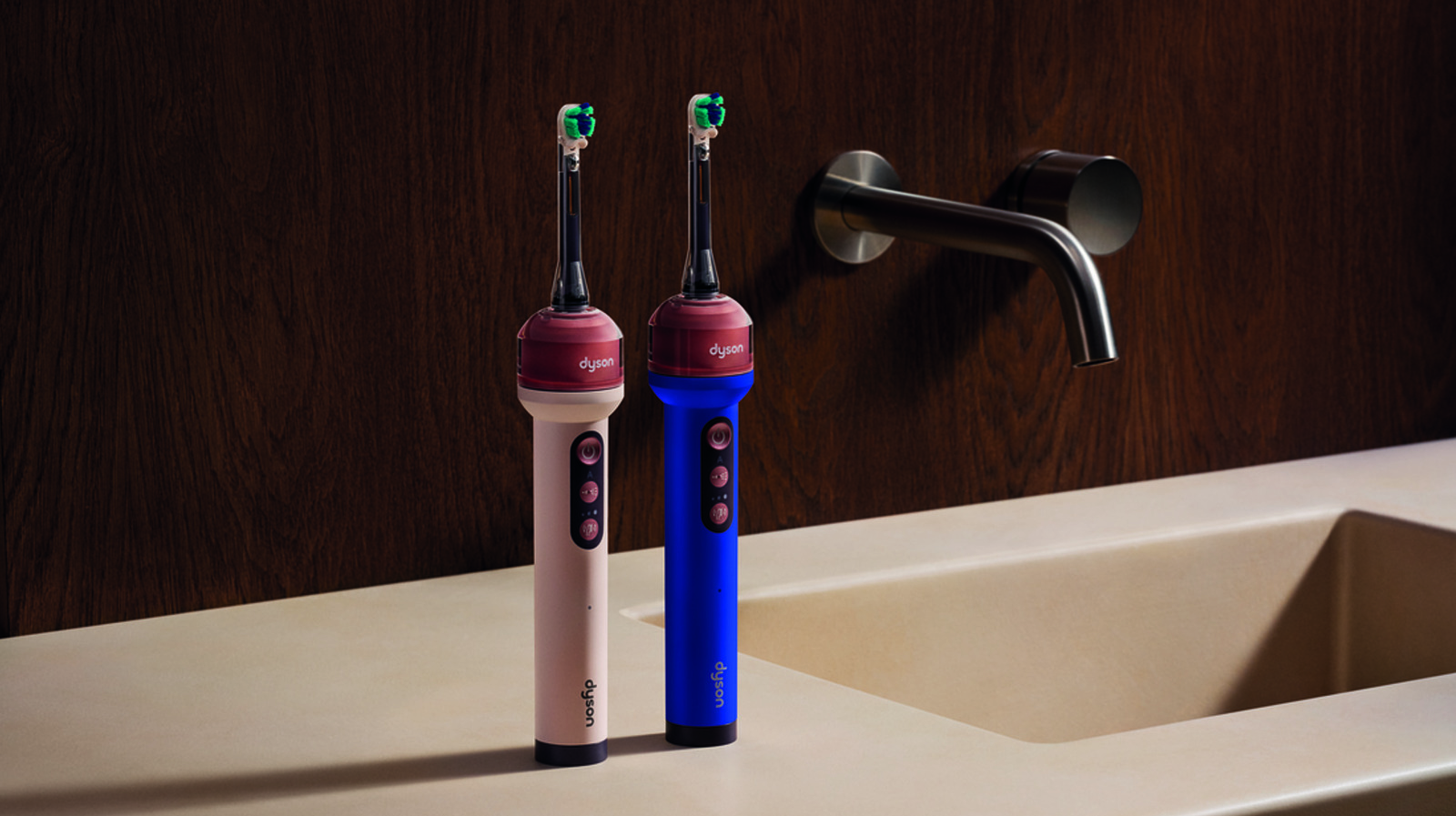
The Dyson CameraJet has what the company calls a “100k pixel macro lens camera” mounted right under the head of the brush. That’s 0.1 megapixels in more typical camera terminology, which may seem like a very small number, but it’s certainly supplemented by some algorithmic effort. More specifically, 16 million lines of code and “a machine learning system trained on 470,000 dental images collected during development” are behind the computer vision targeting here.
Basically, all that computing has taught the CameraJet how to identify the gaps between your teeth. When you brush and the system sees a gap, it will shoot a jet of fluid in a conical shape that helps to floss while you brush. To prevent liquid from accumulating in your mouth as you move along, these bursts of mouthrinse are fired in tiny amounts. The capacity of the water tank that surrounds the neck of the brush is just 12.5ml (0.42 fluid ounces), which is just about two and a half teaspoons.
According to Dyson, the CameraJet’s “Gap Optical Targeting” system analyzes “28 live images per second to identify and target gaps between teeth in real time” and “within 100ms of the camera seeing a gap, the device detects and jets the gap.”
That camera isn’t just there to tell the toothbrush where to shoot fluid. You can use the companion MyDyson app to get a better view of your mouth, especially the back of your teeth. The live-viewing feature is only available during live viewing or auto-jetting, and Dyson says no images are recorded or stored on the product or in the cloud. You can also use the app to get tips, guides and personalized feedback on how to brush better, with details on where you’re already good and what areas you might be falling back on. The app also offers settings so you can tweak brushing intensity and various jetting modes.
In addition to the camera, the company said it uses an “anti-gravity tank with a diaphragm pump and pressure chamber that adapt during use to deliver controlled jets in any orientation.” That means no matter how you hold your toothbrush, the CameraJet should be able to pump water to your mouth, even if you’re somehow upside down and pointing awkwardly at the back of your teeth.
Dyson also stresses the importance of the shape of its water stream. Instead of a simple needle-shaped jet like many other water flossers, Dyson said its “fluid dynamicists spent years optimizing the profile of the jet to remove plaque more effectively.” As a Singaporean, I feel inclined to mention that the company developed “its own proxy plaque through a five-year collaboration with the National University of Singapore’s Faculty of Dentistry” as part of its engineering process.
The result of all that work is a cone-shaped spray of fluid that Dyson says offers wider coverage to sweep and remove plaque while being propelled “at a lower pressure to be gentler on gums and enamel.”
As for what fluids to fill the tank with, you can choose your favorite clear mouth rinse that’s SLS-free to prevent foaming. Dyson is also making its own non-foaming toothpaste and a low-foaming mouthrinse to be used with the CameraJet, so the camera can see clearly without foam blocking its view.
Source: www.engadget.com…