
Web devs sleeping with the enemy: AI is doing their job and they worry it's after their desk too
DevOps
Most software engineers now use AI for most of their code and fear the existential threat
A “state of Web Dev AI” survey shows that nearly
half of web developers worry AI will displace their jobs, with one stating “it will be devastating to our sector.”
The survey
of 7,258 developers is the second on this topic to be conducted by Devographics,
home of other surveys including State of JavaScript and State of CSS.
There are
big changes since the first in early 2025, when the majority
of respondents used AI to create less than 25 percent of their code, whereas
today 63 percent of devs use AI to generate more than half their code.
Over a quarter of respondents (27 percent) use AI for 90 percent or more of
their code.
Code generation is the top AI use case, followed by code review, research, and debugging.
The researchers gathered respondents from those who had
completed previous surveys plus others contacted via social media, and state
that the topic may have “biased the respondent set towards developers who
do have an interest in AI.”
Regarding job security, a common view is that although
developer skills remain relevant in an AI world, their bosses may be convinced
otherwise and let them go.
“AI companies can convince employers that AI
can take my job, even if it can’t,” said one. Another commented that they
“already had to search for a new one, because my job as designer and
frontend dev got cancelled for AI.”
There is concern over loss of skills as junior hires decrease.
“Companies will rather spend the money on AI than train employees,”
one commented.
The most used model provider is ChatGPT (88.4 percent), just
ahead of Anthropic’s Claude (82.1 percent). When it comes to paid subscriptions
though, Claude is the winner (69 percent), followed by ChatGPT (49 percent) and
Google Gemini (32 percent).
Despite increased usage, the respondents are by no means AI
enthusiasts. Use of AI for image generation has fallen since last year, from 38
percent to 37 percent, and some respondents have ethical objections.
“I do
not use image generators on principle,” said one, and another claimed “AI
image generators are built entirely on stolen images.”

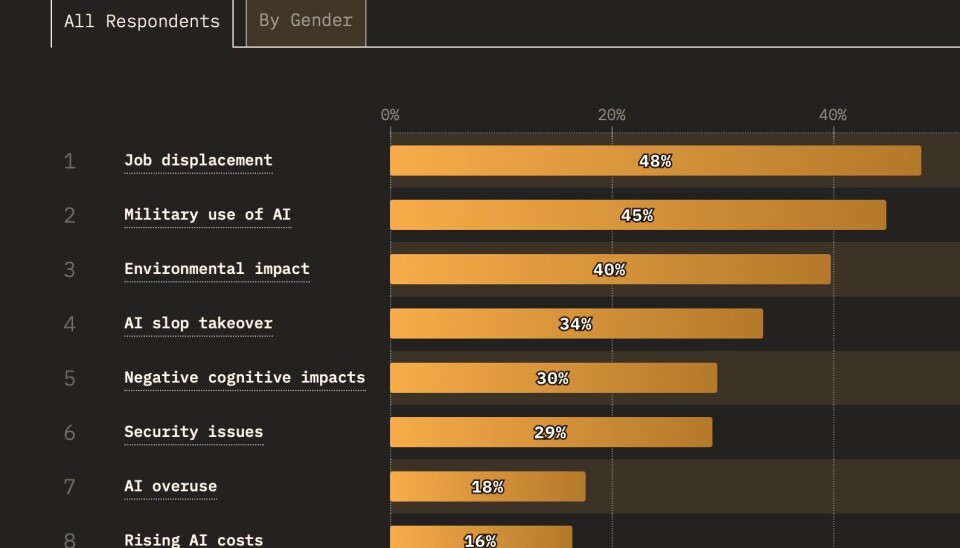
A general section on AI risks revealed a multitude of
concerns: while job displacement topped the list, military use of AI,
environmental impact, and AI slop takeover were not far behind. Security issues
and rising costs were also areas of unease. The survey limited respondents to
three top choices; many comments showed that they would have liked to pick
more.
From a technical perspective, the biggest issues cited were
hallucination and inaccuracies (64 percent); poor code quality (53 percent) and
lack of context (38 percent).
It is a strangely mixed picture, with respondents expressing
strong reservations about the overall impact of AI, while at the same time becoming
dependent on it. 74 percent agreed AI tools are integral to their
workflow, and 64 percent felt they were more productive thanks to AI. 88
percent feel the quality of AI tools has improved significantly year on
year.®
Source: www.theregister.com…