
5 Mysterious NASA Missions Involving the SR-71 Blackbird

The SR-71 Blackbird, a marvel of aerospace engineering, stands as one of the most iconic aircraft in history. Developed by Lockheed’s Skunk Works division in the 1960s, this reconnaissance aircraft was designed to operate at extreme altitudes and speeds, reaching over three times the speed of sound. Its sleek, elongated fuselage and distinctive design were not merely aesthetic; they were the result of meticulous engineering aimed at evading enemy radar and surface-to-air missiles. The Blackbird’s operational capabilities allowed it to gather intelligence from altitudes exceeding 85,000 feet, making it virtually untouchable by contemporary fighter jets and surface defenses.
The SR-71’s introduction into service marked a significant leap in aerial reconnaissance technology. It was equipped with advanced cameras and sensors that could capture high-resolution images and gather electronic intelligence over vast distances. The aircraft’s ability to fly at such high speeds and altitudes not only made it a formidable tool for the United States Air Force but also laid the groundwork for future advancements in aviation technology. The Blackbird’s legacy extends beyond its operational years, influencing modern aircraft design and reconnaissance strategies.
NASA’s Use of the SR-71 Blackbird
NASA recognized the potential of the SR-71 Blackbird beyond military applications, leading to its involvement in various research projects. The agency acquired several SR-71s in the late 1970s, repurposing them for scientific research and atmospheric studies. This transition allowed NASA to explore the aircraft’s capabilities in a civilian context, focusing on high-speed flight and its effects on aerodynamics and materials. The data collected during these missions contributed significantly to the understanding of supersonic flight dynamics.
One of the notable projects undertaken by NASA involved studying the effects of high-speed flight on aircraft structures. The SR-71’s unique design and materials provided invaluable insights into how aircraft could withstand extreme conditions. Researchers utilized the aircraft to gather data on airflow patterns, thermal stresses, and structural integrity at speeds that were previously untested. This research not only advanced NASA’s knowledge but also informed the design of future aircraft, ensuring that they could operate safely and efficiently at high speeds.
Project Blackbird: Studying High-Speed Flight
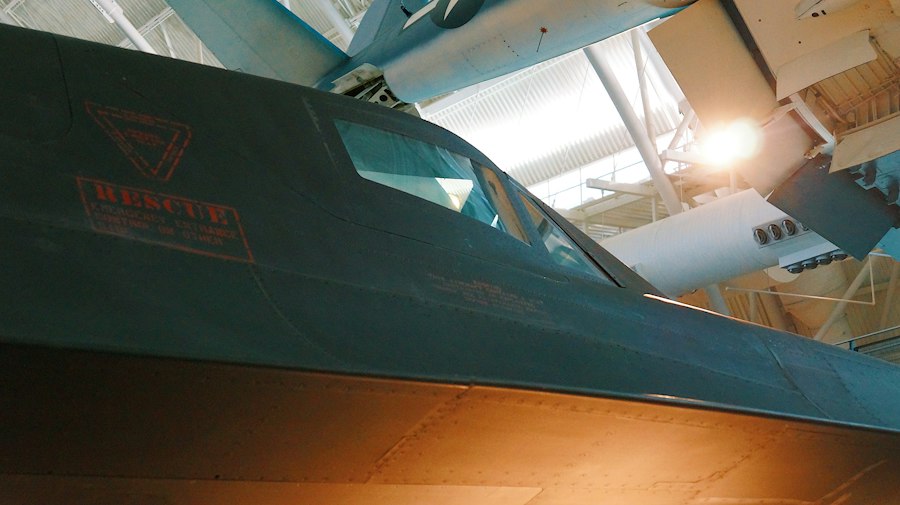
Project Blackbird was a pivotal initiative that aimed to harness the capabilities of the SR-71 for scientific exploration. This project focused on understanding the complexities of high-speed flight, particularly how air behaves around an aircraft traveling at supersonic speeds. Researchers sought to analyze various aerodynamic phenomena, including shock waves and drag reduction techniques, which were critical for improving future aircraft designs.
Through extensive flight tests, Project Blackbird provided a wealth of data that enhanced the understanding of supersonic aerodynamics. The findings from these tests were instrumental in refining computational fluid dynamics models, which are now essential tools in aerospace engineering. By studying the SR-71’s performance characteristics, scientists were able to develop more efficient designs for both military and civilian aircraft, ultimately leading to advancements in fuel efficiency and speed.
Project Oxcart: Testing Hypersonic Technologies
Project Oxcart represented another significant chapter in the exploration of advanced flight technologies using the SR-71 platform. This initiative focused on hypersonic flight—traveling at speeds greater than Mach 5—and aimed to push the boundaries of what was possible in aviation. The project sought to investigate the challenges associated with hypersonic speeds, including thermal management, propulsion systems, and structural integrity.
The SR-71 served as a testbed for various hypersonic technologies, allowing researchers to gather critical data on performance at extreme velocities. The insights gained from Project Oxcart contributed to the development of future hypersonic vehicles and laid the groundwork for ongoing research in this field. By examining how materials reacted under intense heat and pressure during hypersonic flight, scientists were able to identify potential solutions for future aircraft designs that would need to withstand similar conditions.
Project Tagboard: Studying Airborne Laser Technology
| Metric | Value | Description |
|---|---|---|
| Aircraft Name | SR-71 Blackbird | High-speed, high-altitude reconnaissance aircraft |
| Operator | NASA / USAF | Operated by NASA and United States Air Force |
| Number of Missing Aircraft | 1 | One SR-71 reported missing during NASA operations |
| Date of Incident | July 1989 | Approximate date when the SR-71 went missing |
| Last Known Location | California, USA | Area near Edwards Air Force Base |
| Mission Type | Reconnaissance / Research | High-altitude research and reconnaissance mission |
| Outcome | Aircraft lost, crew safe | Aircraft was lost but crew survived the incident |
| Speed | Mach 3.2+ | Maximum operational speed of the SR-71 |
| Altitude | 85,000+ feet | Operational ceiling of the SR-71 |
Project Tagboard was another innovative endeavor that utilized the SR-71 as a platform for testing airborne laser technology. This project aimed to explore the feasibility of using lasers for various applications, including targeting and reconnaissance. The unique capabilities of the Blackbird made it an ideal candidate for such experiments, as its high speed and altitude allowed for clear line-of-sight operations.
During Project Tagboard, researchers conducted numerous tests to evaluate the effectiveness of laser systems in real-world scenarios. The data collected from these experiments provided valuable insights into how lasers could be integrated into aerial platforms for military purposes. Although some aspects of airborne laser technology faced challenges in terms of practicality and effectiveness, the research conducted during this project paved the way for future advancements in laser systems used in both military and civilian applications.
Project Senior Crown: Studying Airborne Radar
Project Senior Crown focused on enhancing airborne radar capabilities using the SR-71 as a testing platform. This initiative aimed to improve radar systems’ effectiveness in detecting and tracking targets from high altitudes and speeds. The project sought to explore how advanced radar technologies could be integrated into reconnaissance missions, providing real-time intelligence to military commanders.
The SR-71’s unique operational profile allowed researchers to test various radar systems under conditions that simulated real-world scenarios. By flying at extreme altitudes and speeds, the aircraft could gather data on radar performance in diverse environments. The findings from Project Senior Crown contributed significantly to advancements in radar technology, leading to improved detection capabilities for both military aircraft and ground-based systems.
Project Senior Prom: Studying Thermal Imaging Technology
Project Senior Prom represented a significant effort to explore thermal imaging technology using the SR-71 as a research platform. This initiative aimed to develop advanced imaging systems capable of detecting heat signatures from various sources, including vehicles and installations on the ground. The ability to capture thermal images from high altitudes would enhance reconnaissance capabilities and provide critical intelligence during military operations.
The SR-71’s speed and altitude allowed researchers to conduct thermal imaging tests over vast areas, gathering data that would be impossible to obtain with conventional aircraft. The insights gained from Project Senior Prom led to advancements in thermal imaging technology, which have since been applied in various fields beyond military applications, including search and rescue operations, environmental monitoring, and disaster response.
Legacy of the SR-71 Blackbird in NASA Missions
The legacy of the SR-71 Blackbird extends far beyond its years of active service with the United States Air Force; it has left an indelible mark on aerospace research and technology development through its contributions to NASA missions. The aircraft’s unique capabilities enabled groundbreaking studies in high-speed flight, hypersonic technologies, airborne laser systems, radar advancements, and thermal imaging techniques. Each project undertaken with the SR-71 provided invaluable data that has shaped modern aviation practices.
As NASA continues to push the boundaries of aerospace exploration, the lessons learned from the SR-71 remain relevant today. The aircraft’s innovative design and operational achievements serve as a testament to human ingenuity and the relentless pursuit of knowledge in aviation technology. The Blackbird not only revolutionized reconnaissance but also paved the way for future advancements that continue to influence both military and civilian aviation sectors. Its legacy endures as a symbol of excellence in aerospace engineering and a reminder of what can be achieved when creativity meets cutting-edge technology.
FAQs
What is the SR-71 Blackbird?
The SR-71 Blackbird is a long-range, high-altitude reconnaissance aircraft developed by Lockheed Martin for the United States Air Force.
Why is the SR-71 Blackbird significant?
The SR-71 Blackbird is known for its speed and altitude capabilities, making it one of the fastest aircraft ever built. It was used for strategic reconnaissance missions during the Cold War.
Why is NASA interested in the SR-71 Blackbird?
NASA used the SR-71 Blackbird for various research purposes, including studying high-speed aerodynamics, propulsion systems, and thermal protection technologies.
Is there a missing SR-71 Blackbird owned by NASA?
There have been rumors and speculation about a missing SR-71 Blackbird owned by NASA, but there is no concrete evidence to support these claims.
What happened to the SR-71 Blackbird fleet?
The SR-71 Blackbird fleet was retired by the United States Air Force in 1998. Some aircraft are on display in museums, while others were dismantled or used for research purposes by NASA.