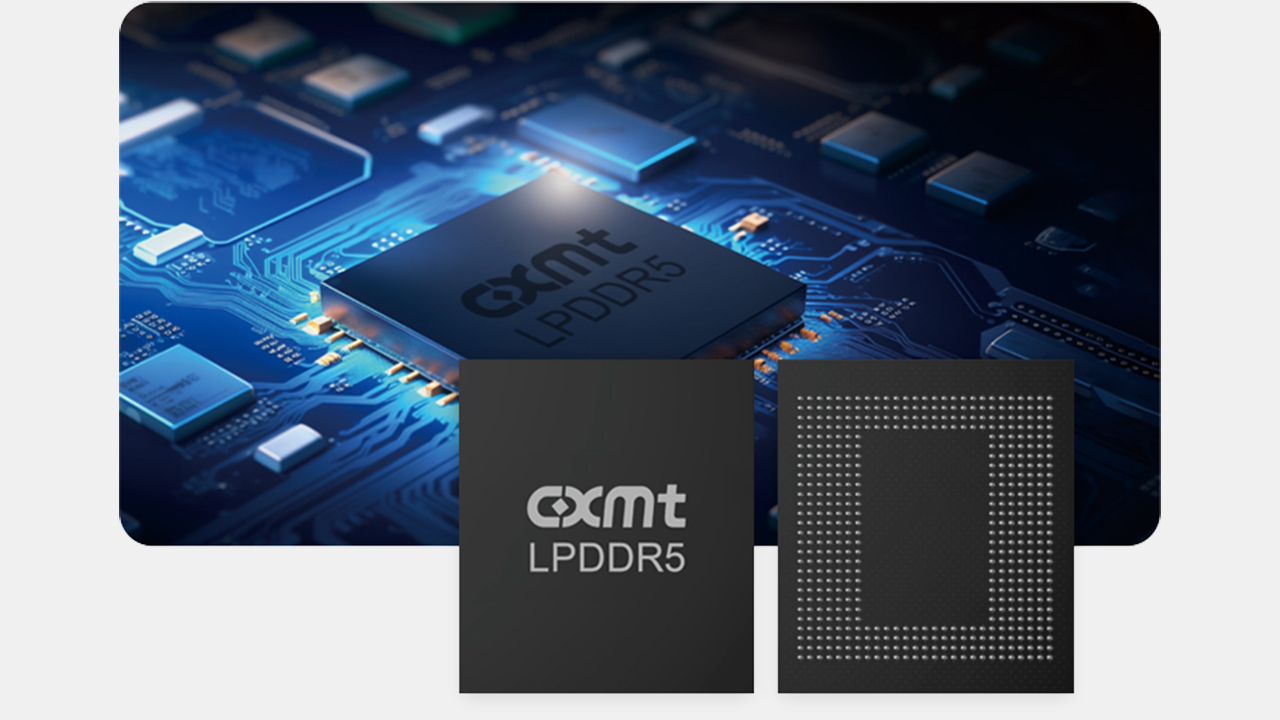
China’s largest domestic memory maker ChangXin Memory Technologies (CXMT), is preparing for a major IPO in Shanghai, aiming to raise roughly $4.2 billion USD to expand production and fund next-generation DRAM development. On its face, it’s a straightforward business story: a fast-growing chipmaker capitalizing on a strong market. Viewed through the lens of today’s global RAM shortage, the move is more interesting and more complicated.
As reported by the South China Morning Post, news of the IPO hasn’t come out of the blue; it isn’t the first time we’ve heard about this, but this time the announcement is official, and CXMT’s timing isn’t accidental. The company nearly doubled its revenue year-over-year in 2025 and expects to swing back into profitability, largely thanks to a rebound in DRAM pricing. That rebound, in turn, is being driven by an unusually strong mix of demand from AI infrastructure, cloud providers, and device manufacturers, all competing for a finite supply of memory chips. In other words, CXMT is going public during one of the most memory-hungry periods the industry has ever seen.

That means CXMT’s expansion may help stabilize things in the medium term, but it’s unlikely to provide immediate relief for PC builders or consumers wondering why DDR5 prices are still elevated. It’s also worth noting what CXMT is not doing: the company isn’t racing to flood the market with ultra-cheap consumer RAM. Like every other major memory manufacturer, it’s prioritizing higher-margin products and long-term customers. That’s just how the economics work now.
In fact, it’s possible that CXMT’s expansion could make things worse in the near term; after all, as companies like CXMT ramp up, they compete for the same fabrication equipment, materials, and engineering talent as Samsung, Micron, and SK hynix. That competition can actually tighten supply elsewhere, especially for legacy memory nodes that consumer hardware still relies on. The result is what we’re already seeing: higher prices, longer lead times, and fewer options at the low end of the market.
Another wrinkle is the question of how quickly CXMT can realistically advance its manufacturing technology. South Korean prosecutors have indicted multiple former Samsung employees over allegations that proprietary DRAM process technology was leaked to CXMT — claims Samsung has said are tied to CXMT’s recent progress at advanced nodes like 10nm. The situation highlights how difficult and resource-intensive cutting-edge memory development really is. Whether through legitimate R&D or contested technology transfer, moving the needle on modern DRAM production is slow, expensive, and heavily constrained, which means even aggressive expansion plans don’t guarantee rapid gains in usable supply.
Still, that doesn’t make the IPO meaningless. In the longer run, additional capacity is still additional capacity. If CXMT succeeds in scaling production efficiently, it could eventually help absorb some of the demand growth that’s currently pushing prices upward. It also adds another serious player to a market that’s been dominated by three companies for years, which is generally healthy for competition.
The main point to consider is that CXMT’s IPO isn’t a sign that the RAM shortage is about to end, but it’s also not proof that things will get worse. It’s better understood as part of a slow rebalancing of the memory industry as it adapts to a world where AI, cloud computing, and high-density systems are the norm.
For PC builders and hardware enthusiasts, the takeaway is mixed: relief is unlikely in the immediate future, but the long-term supply picture is at least moving in the right direction. Whether that translates into cheaper RAM on store shelves depends on how quickly global production can catch up to an industry that’s suddenly very, very hungry for memory.

Follow Tom’s Hardware on Google News, or add us as a preferred source, to get our latest news, analysis, & reviews in your feeds.